
Veterinary Science
✅ What to Expect in This Course
📢 New in 2026–2027: Program‑specific course content will be weighted as Honors‑level coursework. See Program Coursework below for more details.
🔍 Prerequisites: Veterinary Science Program
Must be a Junior
Biology: Grade “C” or better
Algebra I: Grade “C” or better
🧠 Learning & Coursework
The Veterinary Science program prepares students for further study and entry‑level roles in animal care and veterinary fields through a combination of academic instruction and applied laboratory work. Coursework emphasizes animal science fundamentals, veterinary terminology, safety, sanitation, and professional practices used in veterinary settings. Students should expect a structured course that requires study, accuracy, and consistent engagement.
🐾 Hands‑On Animal Care & Laboratory Experiences
This is a highly hands‑on, laboratory‑based course. Students gain experience using industry‑standard equipment and practices while caring for and handling over 30 different animals and various insects housed in the veterinary lab. Animals include species such as lizards, snakes, hamsters, rabbits, and adoptable kittens. Daily responsibilities involve feeding, cleaning, handling, observation, and following strict care protocols.
Students must be comfortable working with live animals and understand that routine care tasks must be completed consistently and responsibly.
⚠️ Safety, Handling, & Biosecurity Expectations
Working with animals carries inherent risks. Students are expected to follow all safety, sanitation, and animal‑handling procedures to protect themselves, others, and the animals in their care. Attention to detail, calm behavior, and compliance with direction are essential for maintaining a safe and humane learning environment.
🏅 Student Leadership & Certifications
Students in this program are expected to participate in FFA (Future Farmers of America) as part of their professional development. FFA involvement supports leadership skills, teamwork, responsibility, and industry engagement aligned with agricultural and horticultural careers.
In addition to earning course credit, students will work toward industry‑recognized credentials, including:
Veterinary Assistant, CVA National Certification
👔 Professional Conduct & Daily Expectations
This program operates with expectations aligned to professional veterinary and animal‑care settings. Students are expected to:
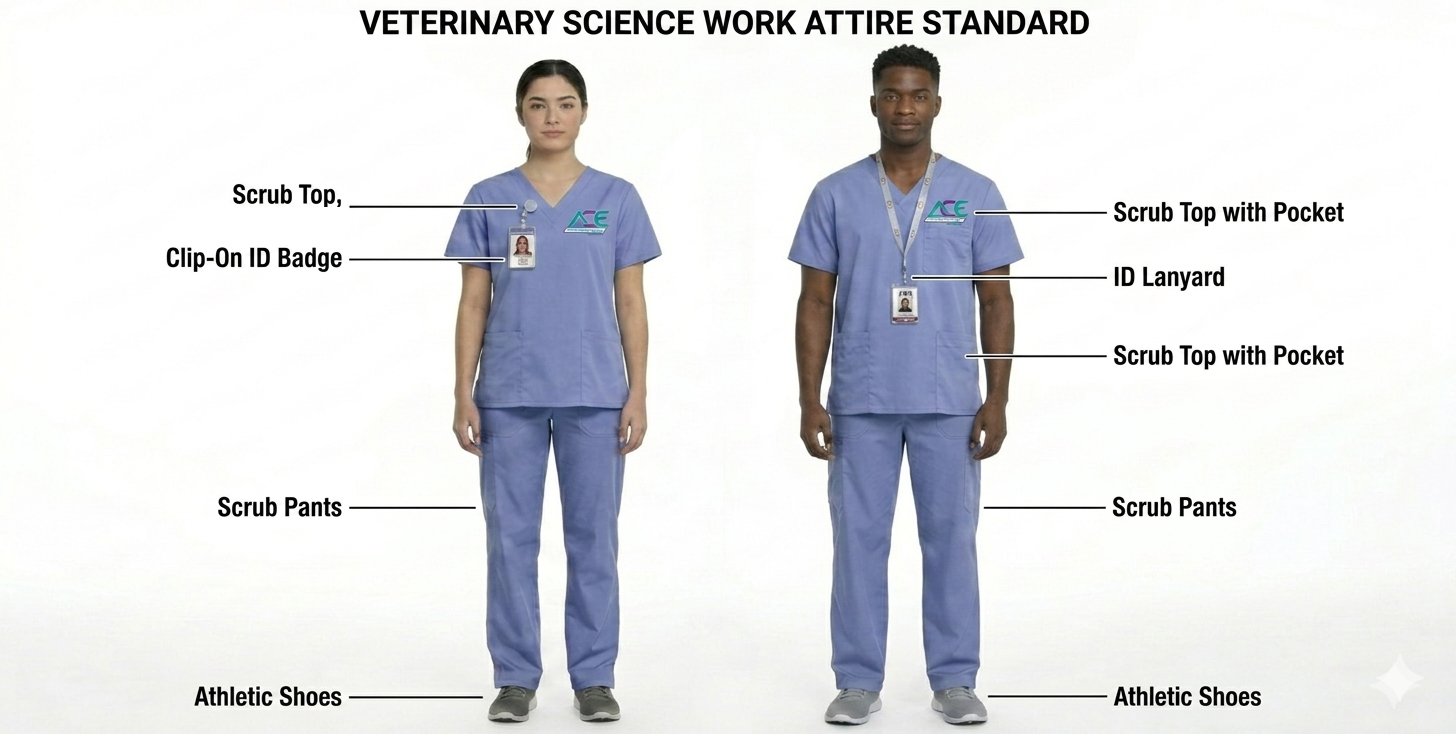
Purchase specific work attire for daily wear when attending ACE classes and events
Display a visible ID badge at all times
Demonstrate professional behavior, punctuality, accountability, and respectful communication
Veterinary science requires responsibility, consistency, and respect for living animals. Students are expected to meet these standards daily, as their actions directly affect animal welfare, safety, and program outcomes.
⬇️ Work attire sample images appear in the image carousel below
Slider is playing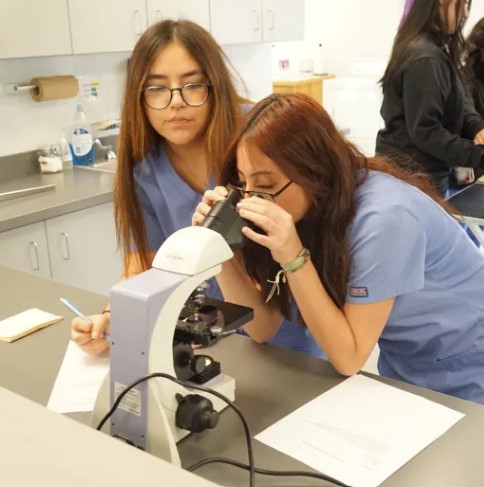
Program Coursework
2 years – 6 HS credits – Advanced Career Education (ACE) Center at Hermitage
This program is designed to be completed in two years during the 11th and 12th grades.
Year 1 (Junior Year)
Small Animal Care I - 1 Credit (Honors): Students learn how to care for and manage small animals, focusing on the connection between humans and animals, animal behavior health, nutrition, management, and reproduction. Opportunities to handle live animals may occur. Course content also includes instruction on the tools, equipment, and facilities used in the small animal care industry.
Small Animal Care II - 1 Credit (Honors): Students will develop the knowledge and skills necessary for training and grooming companion animals, in line with required safety practices and protocols. Instruction includes grooming, required care, technical and maintenance functions related to animal health, animal first aid, and office-management procedures used in the companion animal care industry.
Career Strategies - 1 credit : Career Strategies consists of an in-depth study of career clusters and pathways through a variety of investigative activities. Students analyze career assessment results, compare various educational options, and develop or revise a plan related to their academic and career-related goals.
Year 2 (Senior year)
Veterinary Science I - 1 Credit (Honors): Veterinary Science I prepares students for postsecondary education and/or careers in veterinary medicine or related fields. Major topics include characteristics and care of common companion and livestock animals, safety practices, anatomy and physiology, nutrition, medical terminology, sanitation, and clinical exams. Course content also includes communication, facility operations, office functions, and professional etiquette in the workplace. Opportunities to handle live animals may occur.
Veterinary Science II - 1 Credit (Honors): Students expand their knowledge of animal science and the care of animals, including animal structure and function, microbes and disease prevention, parasitology, and genetics and breeding. Students develop more advanced skills and techniques for assisting the veterinarian and/or technician in the following areas: performing first aid and surgery, applying aseptic techniques, performing technical functions, administering medication, handling death and dying, working with wildlife, and performing office functions. Opportunities to handle live animals may occur.
Entrepreneurship I - 1 Credit: Introduces students to starting and managing their own business. Covers planning techniques, design thinking, business model development, financial statements, marketing, sales, customer service, and fundamental economic principles for success.
🐶 Student‑Led Services & Professional Practice
Students in this program provide pet grooming services as part of their applied learning. These student‑led services allow learners to practice technical skills in a professional setting while developing confidence, responsibility, and customer service skills consistent with veterinary and animal‑care environments. See their flyer here : Pet Grooming
Instructors
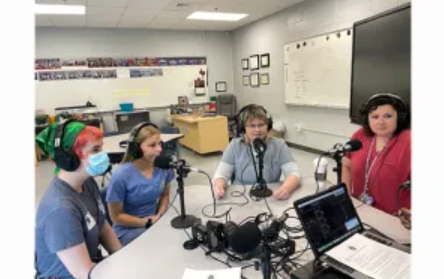
Published: March 19, 2024. Check out our podcast! Click here to listen. In this episode, we speak with former Vet Science graduate, Gillian Glessman, current Vet Science student, Maddie Truban, and Vet Science instructors, Gretchen Hedges, and Karen Bickett. We talk about the many career paths available to Vet Science students including preparing for college to become a veterinarian. With the explosion of pet ownership in the country the field is in desperate need for vets and support staff across the field.